

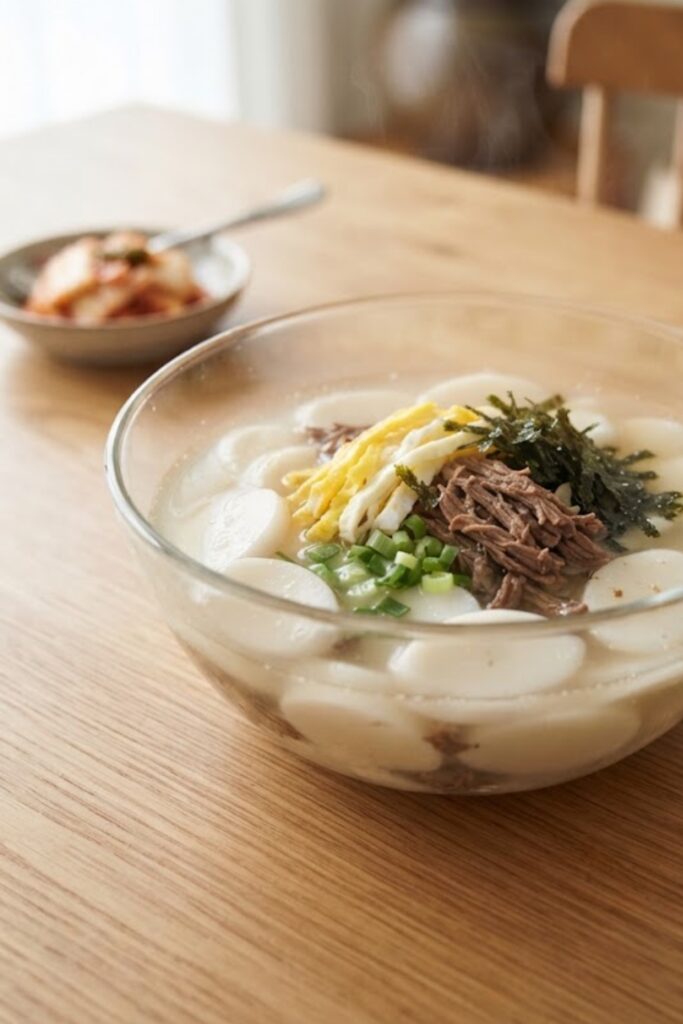
Korean Tteokguk Recipe
Description
Korean Tteokguk is a traditional Korean rice cake soup made with chewy sliced garaetteok simmered in a rich and savory beef broth. Tender beef, delicate egg ribbons, green onions, garlic, and roasted seaweed add layers of flavor and texture to this comforting Korean classic.
Tteokguk is especially associated with Korean New Year celebrations, when eating a bowl of rice cake soup symbolizes welcoming the new year and growing a year older. However, its simple ingredients and satisfying flavor make it perfect for a comforting family meal any time of year.
This authentic Korean Tteokguk recipe is easy to prepare and creates a warm, hearty bowl with chewy rice cakes, savory broth, tender beef, and fresh garnishes.
Preparation Time: 20 minutes
Cooking Time: 25 minutes
Rest Time: 5 minutes
Total Time: 50 minutes
Servings: 4 people
Difficulty: Easy
Cooking Temperature: Medium Heat (325–350°F / 165–175°C)
Why You Will Love This Korean Tteokguk
- Chewy and satisfying Korean rice cakes.
- Rich and savory beef broth.
- Tender slices of beef.
- Simple traditional Korean ingredients.
- Perfect for Korean New Year celebrations.
- Easy enough for an everyday family meal.
- Beautifully finished with egg and seaweed.
- Comforting and filling.
How to Make Korean Tteokguk
1. Soak the Rice Cakes
Place the sliced Korean rice cakes in a large bowl.
Cover with cold water and soak for about 10 minutes.
Drain well before cooking.
2. Prepare the Beef
Thinly slice the beef.
Heat sesame oil in a large pot over medium heat.
Add the beef and minced garlic.
Cook for 3–4 minutes until the beef is lightly browned.
3. Add the Broth
Pour the beef broth into the pot.
Bring it to a gentle boil.
Skim off any foam that rises to the surface for a cleaner broth.
4. Add the Rice Cakes
Drain the soaked rice cakes thoroughly.
Add them to the simmering broth.
Cook for about 5–7 minutes until the rice cakes become soft and chewy.
Avoid overcooking them.
5. Prepare the Egg
Whisk the eggs in a small bowl.
Slowly pour the beaten eggs into the simmering soup while gently stirring.
Cook for about 1 minute until the egg forms delicate ribbons.
6. Season the Soup
Add soy sauce, salt, and black pepper.
Taste the broth and adjust the seasoning if needed.
7. Add the Green Onions
Add sliced green onions.
Simmer for another 1–2 minutes.
8. Rest and Serve
Remove the pot from the heat.
Let the Tteokguk rest for 5 minutes.
Ladle into bowls and garnish with roasted seaweed strips and additional green onions.
Serve warm.
Tips for Perfect Korean Tteokguk
- Soak refrigerated or firm rice cakes before cooking.
- Use a flavorful beef broth for the best result.
- Do not overcook the rice cakes because they can become too soft.
- Pour the egg slowly for delicate ribbons.
- Adjust salt after adding soy sauce.
- Add seaweed just before serving to maintain its texture.
Delicious Recipe Variations
Dumpling Tteokguk
Add Korean mandu to the soup for a hearty Tteok Manduguk variation.
Chicken Tteokguk
Replace beef broth and beef with chicken for a lighter version.
Seafood Tteokguk
Add shrimp, clams, or squid for a seafood-inspired soup.
Spicy Tteokguk
Add gochugaru and sliced Korean green chili peppers for a spicy version.
Vegetarian Tteokguk
Use vegetable or mushroom broth and replace the beef with mushrooms and tofu.
What to Serve with Korean Tteokguk
- Kimchi
- Kkakdugi
- Korean cucumber salad
- Roasted seaweed
- Seasoned spinach
- Pickled radish
- Korean side dishes
How to Store Leftover Tteokguk
Allow the soup to cool completely.
Store it in an airtight container in the refrigerator for up to 3 days.
Reheat gently on the stovetop.
For the best texture, add freshly cooked rice cakes when reheating if possible.
Can Korean Tteokguk Be Frozen?
Yes.
For the best texture, freeze the broth and beef separately from the rice cakes.
Store the broth in a freezer-safe container for up to 2 months.
Thaw overnight in the refrigerator and reheat before adding fresh rice cakes.
Ingredients
For the Soup
For the Egg
For Garnish
Instructions
-
Soak the sliced Korean rice cakes in cold water for 10 minutes, then drain.
-
Heat sesame oil in a large pot over medium heat and cook the sliced beef and garlic for 3–4 minutes.
-
Add the beef broth and bring it to a gentle boil, skimming any foam from the surface.
-
Add the drained rice cakes and cook for 5–7 minutes until tender and chewy.
-
Slowly pour in the beaten eggs while gently stirring the soup.
-
Add soy sauce, salt, and black pepper and adjust the seasoning to taste.
-
Add green onions and simmer for another 1–2 minutes.
-
Rest the soup for 5 minutes, then garnish with roasted seaweed and sesame seeds.
-
Serve warm with Korean side dishes.
