

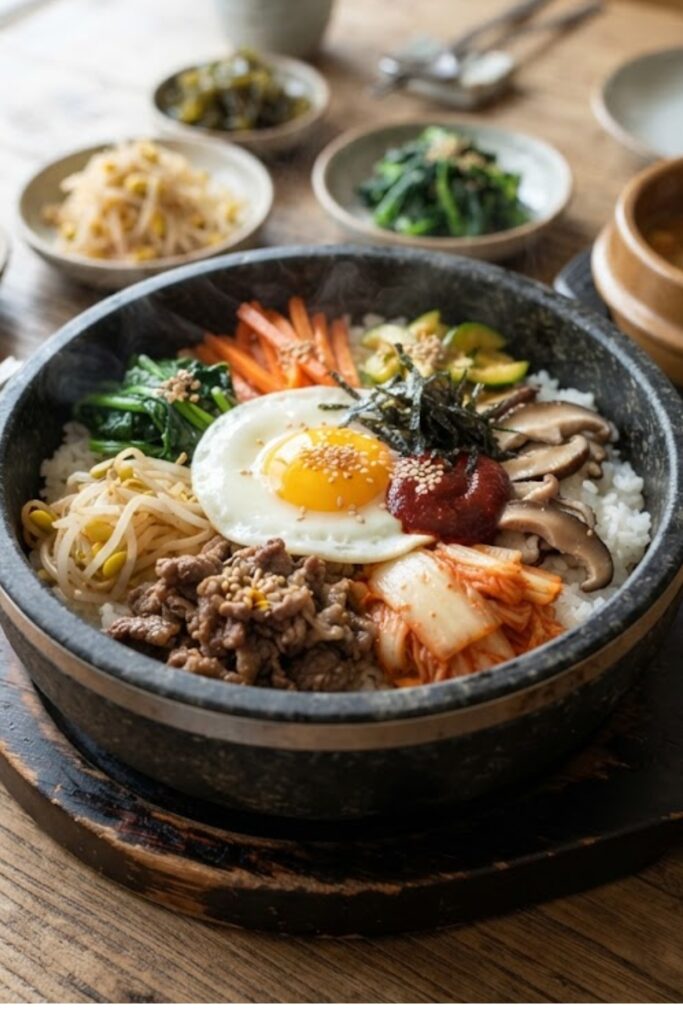
Authentic Korean Bibimbap Recipe
Description
Bibimbap is one of South Korea's most iconic and beloved dishes, featuring warm steamed rice topped with colorful seasoned vegetables, marinated beef, a perfectly cooked fried egg, and spicy gochujang sauce. The name Bibimbap literally means "mixed rice," as all the ingredients are stirred together before eating to create a perfect balance of flavors and textures.
This authentic Korean Bibimbap recipe combines tender beef, fresh vegetables, fragrant sesame oil, and savory seasonings to create a healthy, satisfying meal that's both beautiful and delicious. Whether you're preparing a quick family dinner or introducing someone to Korean cuisine, Bibimbap is an easy and versatile recipe that everyone will enjoy.
Serve it with kimchi, Korean side dishes, and extra gochujang for a complete restaurant-quality Korean meal at home.
Preparation Time: 30 minutes
Cooking Time: 25 minutes
Rest Time: 5 minutes
Total Time: 1 hour
Servings: 4 people
Difficulty: Easy
Cooking Temperature: Medium-High Heat (approximately 375–400°F / 190–205°C)
Why You Will Love This Korean Bibimbap
- Beautiful and colorful presentation.
- Loaded with fresh vegetables.
- Authentic Korean flavors.
- High-protein and nutritious meal.
- Easy to customize with your favorite toppings.
- Perfect for meal prep.
- Beginner-friendly recipe.
- Restaurant-quality at home.
- Balanced with vegetables, rice, and protein.
- Ready in about one hour.
How to Make Korean Bibimbap
1. Cook the Rice
Rinse the rice until the water runs clear.
Cook according to the package instructions.
Keep warm until ready to serve.
2. Marinate the Beef
In a bowl combine:
Soy sauce
Sesame oil
Brown sugar
Garlic
Black pepper
Add the thinly sliced beef.
Mix well and marinate for 20 minutes.
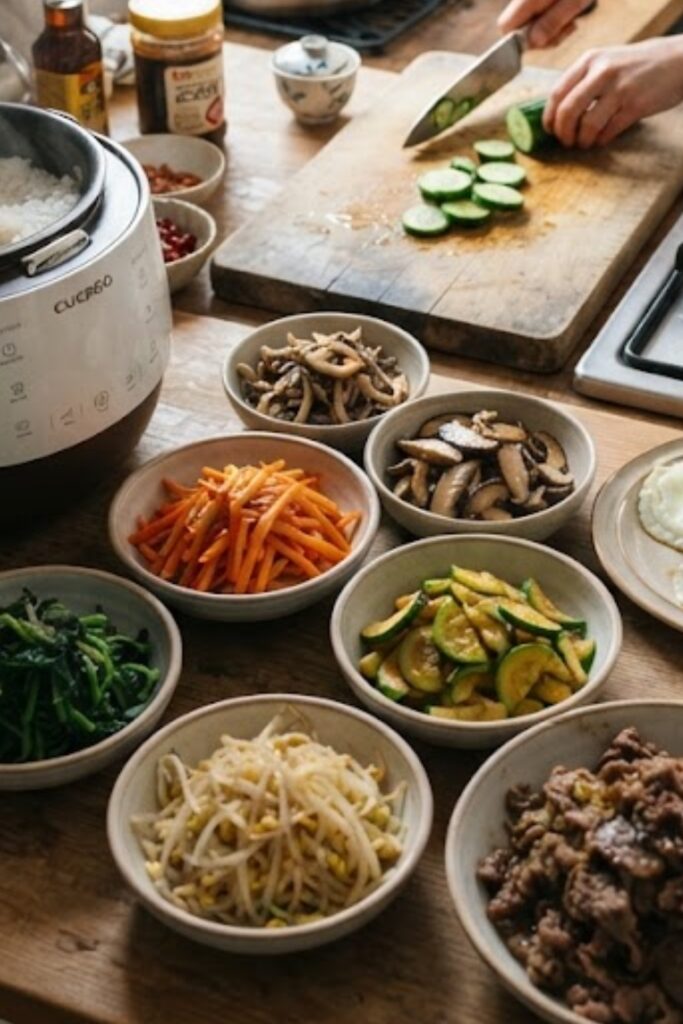
3. Prepare the Vegetables
Julienne the carrots.
Slice the zucchini.
Clean the mushrooms.
Rinse the spinach and bean sprouts.
Keep each vegetable separate for cooking.
4. Cook the Vegetables
Heat a skillet over medium heat.
Cook each vegetable separately with a small amount of sesame oil and a pinch of salt.
Transfer each vegetable to individual plates after cooking.
5. Cook the Beef
Heat a skillet over medium-high heat.
Cook the marinated beef for 4–5 minutes until browned and fully cooked.
Set aside.
6. Fry the Eggs
Heat a small non-stick skillet.
Cook the eggs sunny-side up until the whites are set and the yolks remain slightly runny.
7. Assemble the Bibimbap
Divide the cooked rice among serving bowls.
Arrange the carrots, spinach, zucchini, mushrooms, bean sprouts, and beef in separate sections over the rice.
Place one fried egg in the center.
Add a spoonful of gochujang.
Drizzle with sesame oil.
Sprinkle toasted sesame seeds over the top.
8. Serve
Serve immediately.
Mix everything together before eating for the best flavor.
Tips for Perfect Bibimbap
- Cook each vegetable separately for the best flavor.
- Use freshly steamed rice.
- Do not overcook the beef.
- Keep the vegetables slightly crisp.
- Use authentic Korean gochujang.
- Add sesame oil just before serving.
- Serve immediately while warm.
- Mix well before eating.
Delicious Recipe Variations
Dolsot Bibimbap
Serve in a hot stone bowl for crispy rice.
Chicken Bibimbap
Replace the beef with grilled chicken.
Seafood Bibimbap
Top with shrimp, squid, or mixed seafood.
Vegetarian Bibimbap
Skip the meat and add tofu or extra mushrooms.
Spicy Bibimbap
Add extra gochujang and Korean chili flakes.
What to Serve with Korean Bibimbap
- Kimchi
- Korean cucumber salad
- Pickled radish
- Japchae
- Korean soybean paste soup
- Seaweed soup
- Steamed dumplings
- Assorted Korean banchan
How to Store Leftover Bibimbap
Allow the ingredients to cool completely.
Store the rice, vegetables, and beef separately in airtight containers in the refrigerator for up to 3 days.
Assemble and reheat before serving.
Can Korean Bibimbap Be Frozen?
The cooked beef and rice can be frozen for up to 2 months.
The fresh vegetables and fried eggs are best prepared fresh for serving.
Thaw the rice and beef overnight in the refrigerator before reheating.
Ingredients
For the Rice
For the Beef
For the Vegetables
For the Toppings
For Serving (Optional)
Instructions
-
Cook the rice and keep it warm.
-
Marinate the beef with soy sauce, sesame oil, brown sugar, garlic, and black pepper for 20 minutes.
-
Cook each vegetable separately with sesame oil and a pinch of salt.
-
Cook the marinated beef until browned and fully cooked.
-
Fry the eggs sunny-side up.
-
Divide the rice among serving bowls.
-
Arrange the vegetables and beef over the rice.
-
Place a fried egg in the center.
-
Add gochujang and drizzle with sesame oil.
-
Garnish with sesame seeds and green onions.
-
Mix everything together before eating and enjoy.

Best Recipe
Got it.