

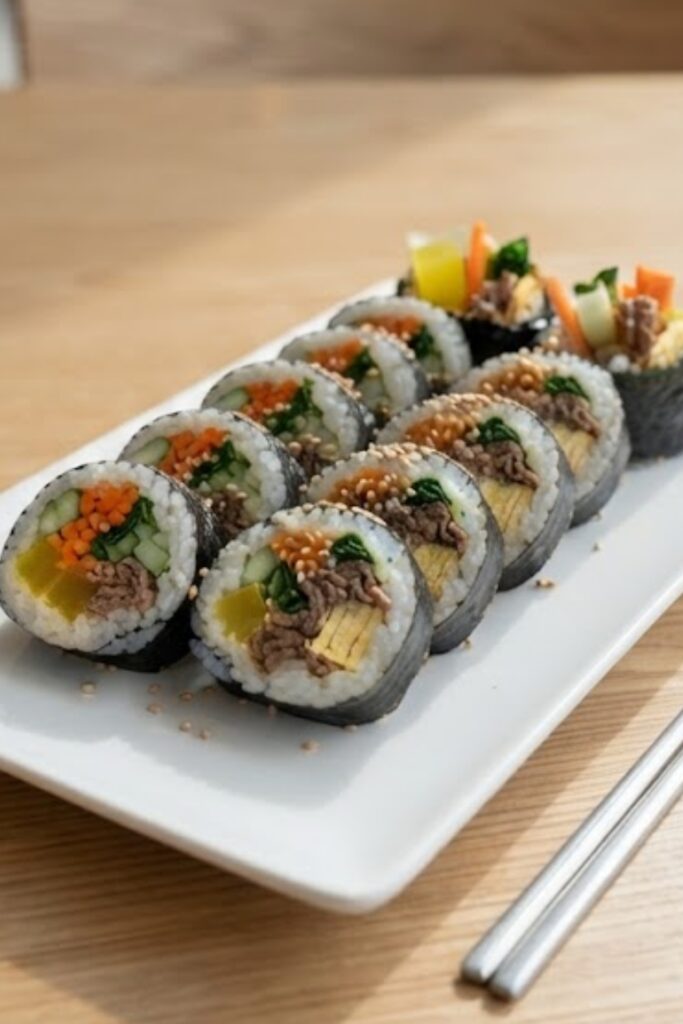
Korean Gimbap Recipe
Description
Korean Gimbap is one of Korea's most beloved everyday foods, made by rolling seasoned rice, vegetables, egg, and savory fillings inside sheets of toasted roasted seaweed. Each roll is sliced into neat bite-sized pieces, creating a colorful and satisfying meal that is perfect for lunch, picnics, school meals, or casual family gatherings.
This authentic Korean Gimbap recipe combines fluffy sesame-seasoned rice with tender beef, carrots, spinach, yellow pickled radish, and thin strips of egg omelet. The ingredients are prepared separately and layered carefully before being tightly rolled in roasted seaweed for a balanced combination of savory, fresh, slightly sweet, and nutty flavors.
Easy to customize and perfect for meal prep, homemade Gimbap is a delicious way to enjoy a classic Korean dish with simple, fresh ingredients.
Preparation Time: 30 minutes
Cooking Time: 25 minutes
Rest Time: 5 minutes
Total Time: 1 hour
Servings: 4 people
Difficulty: Intermediate
Cooking Temperature: Medium Heat (approximately 325–350°F / 165–175°C)
Why You Will Love This Korean Gimbap
- Colorful and delicious Korean meal.
- Packed with fresh vegetables and protein.
- Perfect for lunch boxes and picnics.
- Easy to customize with different fillings.
- Balanced savory and nutty flavors.
- Great for meal prep.
- Naturally portable and easy to serve.
- Classic Korean comfort food.
How to Make Korean Gimbap
1. Prepare the Rice
Cook short-grain white rice according to the package directions.
Transfer the cooked rice to a large bowl.
Gently mix in sesame oil and a little salt.
Allow the rice to cool slightly.
2. Prepare the Beef
Slice the beef into thin strips.
Combine it with soy sauce, sesame oil, sugar, garlic, and black pepper.
Let it marinate for about 10 minutes.
3. Cook the Vegetables
Blanch the spinach briefly in boiling water.
Drain and squeeze out excess moisture.
Season with sesame oil, salt, and minced garlic.
Stir-fry the carrots in a lightly oiled skillet until slightly tender.
4. Prepare the Egg
Whisk the eggs with a small pinch of salt.
Pour them into a lightly oiled skillet.
Cook into a thin omelet.
Allow it to cool slightly and cut into long thin strips.
5. Cook the Beef
Heat a skillet over medium heat.
Cook the marinated beef until fully cooked and lightly caramelized.
Set aside to cool slightly.
6. Prepare the Gimbap Station
Place a sheet of roasted seaweed on a bamboo rolling mat.
Spread an even layer of seasoned rice over about two-thirds of the seaweed.
Arrange beef, spinach, carrots, egg, and yellow pickled radish in a horizontal line near the lower third of the rice.
7. Roll the Gimbap
Lift the edge of the bamboo mat and begin rolling firmly.
Tuck the fillings inward while continuing to roll.
Press gently but firmly to create a compact cylinder.
8. Slice and Finish
Brush the outside lightly with sesame oil.
Sprinkle with toasted sesame seeds.
Using a sharp knife, slice the roll into bite-sized pieces.
Serve immediately or pack for later.
Tips for Perfect Gimbap
- Use slightly warm or room-temperature rice rather than cold rice.
- Avoid adding too much rice because thick rolls are harder to shape.
- Keep the fillings relatively dry.
- Do not overfill the seaweed.
- Roll firmly while keeping the fillings centered.
- Use a sharp knife for clean slices.
- Lightly oil the knife if the rice sticks.
- Toasted sesame seeds add extra aroma and flavor.
Delicious Recipe Variations
Tuna Gimbap
Replace the beef with tuna mixed with a small amount of mayonnaise.
Chicken Gimbap
Use thinly sliced seasoned chicken instead of beef.
Vegetable Gimbap
Skip the meat and add mushrooms, cucumber, bell peppers, or additional spinach.
Spicy Gimbap
Add spicy Korean tuna, gochujang, or thinly sliced Korean chili peppers.
Cheese Gimbap
Add thin strips of mild cheese alongside the traditional fillings.
What to Serve with Korean Gimbap
- Kimchi
- Pickled yellow radish
- Korean fish cake
- Tteokbokki
- Korean cucumber salad
- Miso-style soup
- Fresh fruit
- Korean vegetable side dishes
How to Store Leftover Gimbap
Gimbap is best enjoyed fresh.
If necessary, wrap leftover rolls tightly and refrigerate for up to 1 day.
Allow refrigerated Gimbap to come closer to room temperature before serving.
Because the rice can become firm in the refrigerator, avoid storing it for too long.
Can Korean Gimbap Be Frozen?
Freezing fully assembled Gimbap is not recommended because the rice and vegetables can develop an unpleasant texture after thawing.
For meal preparation, prepare the individual cooked fillings ahead of time and refrigerate them separately for up to 2–3 days.
Assemble fresh Gimbap when ready to serve.
Ingredients
For the Rice
For the Beef
For the Vegetables
For the Egg
For the Gimbap
Instructions
-
Cook the short-grain rice and season it with sesame oil and salt, then allow it to cool slightly.
-
Marinate the beef with soy sauce, sesame oil, sugar, garlic, and black pepper for 10 minutes.
-
Blanch and season the spinach, then stir-fry the carrots until tender.
-
Cook the eggs into a thin omelet, cool slightly, and slice into long strips.
-
Cook the marinated beef over medium heat until fully cooked and lightly caramelized.
-
Place roasted seaweed on a bamboo mat and spread seasoned rice evenly over two-thirds of the sheet.
-
Arrange beef, spinach, carrots, egg, and pickled radish across the rice.
-
Roll the Gimbap firmly, brush lightly with sesame oil, and sprinkle with sesame seeds.
-
Slice into bite-sized pieces with a sharp knife and serve.
