

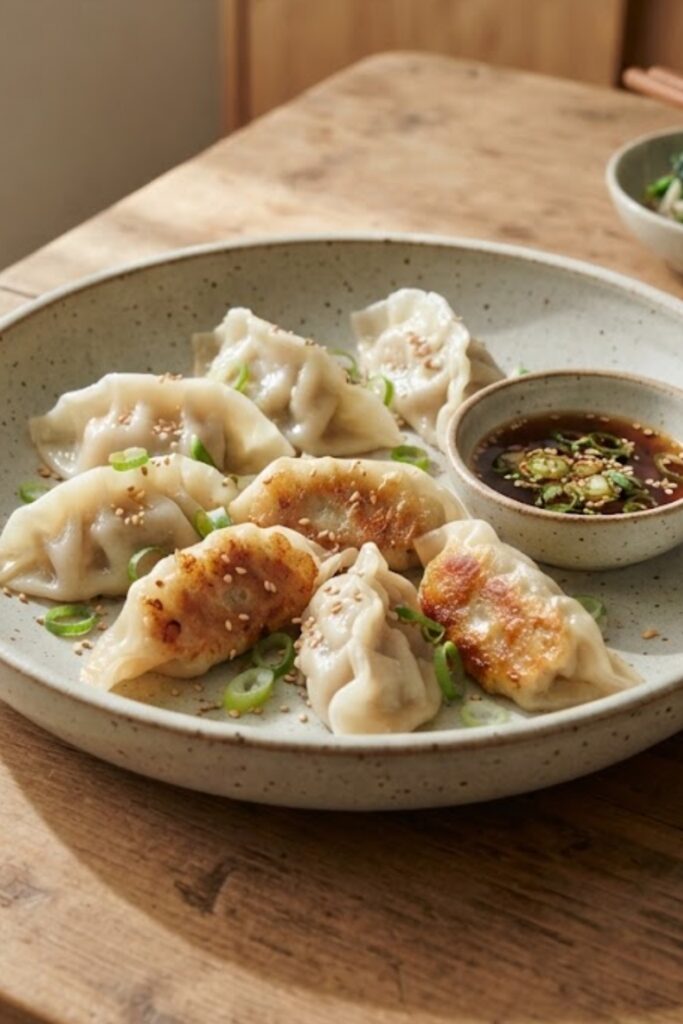
Korean Mandu
Description
Korean Mandu are traditional Korean dumplings filled with a savory mixture of ground pork, tofu, vegetables, garlic, green onions, and aromatic Korean seasonings. Wrapped in thin dumpling skins and cooked until tender and golden, Mandu have a juicy, flavorful filling with a delicious contrast between the soft wrapper and crisp edges.
This authentic Korean Mandu recipe combines classic ingredients such as napa cabbage, tofu, pork, sesame oil, soy sauce, garlic, and green onions. The dumplings can be pan-fried, steamed, or cooked in different Korean dishes, making them a versatile favorite for home meals, snacks, and special occasions.
Korean Mandu are commonly served with a simple soy-vinegar dipping sauce alongside kimchi, pickled radish, or other Korean side dishes. They are also excellent for preparing ahead and freezing for convenient homemade meals.
Preparation Time: 40 minutes
Cooking Time: 15 minutes
Rest Time: 10 minutes
Total Time: 1 hour 5 minutes
Servings: 4 people
Difficulty: Intermediate
Cooking Temperature: Medium Heat (325–350°F / 165–175°C)
Why You Will Love This Korean Mandu
- Traditional Korean dumpling recipe.
- Juicy pork and tofu filling.
- Crispy golden bottoms when pan-fried.
- Rich sesame and garlic flavor.
- Easy to customize with vegetables.
- Perfect as an appetizer, snack, or main course.
- Freezer-friendly for easy meal preparation.
- Delicious with Korean dipping sauce and kimchi.
How to Make Korean Mandu
1. Prepare the Vegetables
Finely chop the napa cabbage and green onions.
Sprinkle the cabbage with a little salt and let it rest for about 10 minutes.
Squeeze the cabbage thoroughly to remove excess moisture.
2. Prepare the Tofu
Crumble the firm tofu and wrap it in a clean kitchen towel.
Press firmly to remove as much moisture as possible.
3. Prepare the Filling
In a large mixing bowl, combine the ground pork, drained tofu, cabbage, green onions, minced garlic, ginger, soy sauce, sesame oil, salt, black pepper, and gochugaru.
Mix thoroughly until all ingredients are evenly combined.
4. Fill the Dumpling Wrappers
Place one mandu wrapper on a clean surface.
Add about 1 tablespoon of filling to the center.
Moisten the edges with water, fold the wrapper over, and press firmly to seal.
5. Shape the Mandu
Create a simple half-moon shape or pleat the edges for a traditional appearance.
Make sure the edges are sealed tightly so the filling does not escape during cooking.
6. Pan-Fry the Mandu
Heat a lightly oiled skillet over medium heat.
Arrange the mandu in a single layer and cook until the bottoms become golden brown.
7. Steam the Mandu
Add a few tablespoons of water to the skillet and immediately cover with a lid.
Steam for several minutes until the wrappers become tender and the pork filling is fully cooked.
The pork filling should reach 160°F (71°C) internally.
8. Crisp the Bottoms
Remove the lid and allow any remaining water to evaporate.
Continue cooking until the bottoms become golden and crisp again.
9. Serve
Transfer the cooked Mandu to a serving plate.
Serve warm with soy-vinegar dipping sauce, kimchi, pickled Korean radish, or other Korean side dishes.
Tips for Perfect Korean Mandu
- Remove as much moisture as possible from the cabbage and tofu.
- Do not overfill the wrappers because they can split during cooking.
- Keep unused wrappers covered so they do not dry out.
- Press the edges firmly when sealing the dumplings.
- Avoid overcrowding the skillet.
- Use medium heat so the bottoms brown without burning.
- Make sure the pork filling reaches 160°F (71°C).
- Allow the cooked Mandu to rest briefly before serving.
Delicious Recipe Variations
Kimchi Mandu
Add finely chopped and well-drained kimchi to the filling for a spicy and tangy Korean flavor.
Vegetable Mandu
Replace the pork with additional tofu, mushrooms, cabbage, carrots, and green onions for a vegetarian-style dumpling.
Beef Mandu
Replace the ground pork with ground beef while keeping the same Korean seasonings.
Shrimp Mandu
Add finely chopped shrimp to the filling for a seafood-inspired Korean dumpling.
Steamed Mandu
Steam the assembled dumplings instead of pan-frying them for a soft and tender wrapper.
What to Serve with Korean Mandu
- Soy-vinegar dipping sauce
- Kimchi
- Pickled Korean radish
- Spicy cucumber salad
- Seasoned bean sprouts
- Steamed white rice
- Korean vegetable side dishes
- Light Korean soup
How to Store Leftover Korean Mandu
Allow cooked Mandu to cool completely.
Place them in an airtight container and refrigerate for up to 3 days.
Reheat gently in a skillet, steamer, or air fryer until thoroughly heated.
Can Korean Mandu Be Frozen?
Yes.
Arrange uncooked Mandu in a single layer on a parchment-lined tray and freeze until firm.
Transfer the frozen dumplings to a freezer-safe container or bag.
Freeze for up to 2–3 months.
Cook the Mandu directly from frozen without thawing, adding a few extra minutes to the cooking time.
Ingredients
For the Mandu Filling
For the Dumplings
For the Dipping Sauce
Instructions
-
Salt the chopped cabbage, rest for 10 minutes, then squeeze out excess moisture.
-
Press the tofu dry and crumble it into a large mixing bowl.
-
Add pork, cabbage, tofu, green onions, garlic, ginger, soy sauce, sesame oil, pepper, and egg.
-
Mix thoroughly until the filling becomes evenly combined and slightly sticky.
-
Place about 1 tablespoon filling onto each wrapper, moisten the edges, fold, and seal tightly.
-
Heat oil in a skillet over medium heat and pan-fry the mandu until the bottoms are golden.
-
Add a few tablespoons of water, cover, and steam until cooked through.
-
Remove the lid and cook until the bottoms become crisp again.
-
Serve with the soy-vinegar dipping sauce.
