
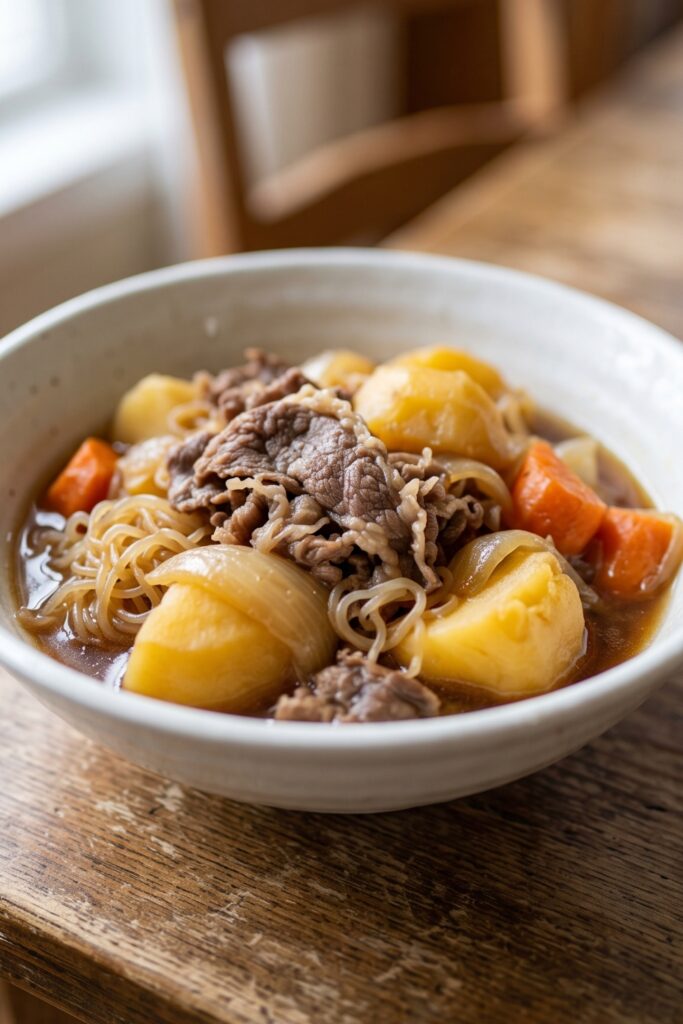
Japanese Nikujaga is a classic homemade comfort food made with thinly sliced beef, tender potatoes, onions, and carrots simmered in a flavorful broth of dashi, soy sauce, mirin, sake, and sugar. The name Nikujaga combines “niku,” meaning meat, and “jaga,” a shortened form of jagaimo, meaning potato.
This traditional Japanese dish is simple, hearty, and deeply comforting, making it a popular choice for family dinners. The potatoes absorb the sweet and savory broth while the beef becomes tender and flavorful. Serve Nikujaga with steamed Japanese rice and miso soup for a comforting Japanese-style meal.
Preparation Time: 20 minutes
Cooking Time: 35 minutes
Rest Time: 10 minutes
Total Time: 1 hour 5 minutes
Servings: 4 people
Difficulty: Easy
Peel and cut the potatoes and carrots into large bite-sized pieces. Slice the onion into wedges and cut the beef into thin strips.
Heat vegetable oil in a large pot over medium heat, approximately 350°F (175°C). Add the beef and onion and cook briefly until the beef begins to change color.
Add the potatoes and carrots and gently stir everything together for a few minutes.
Pour in the dashi stock, soy sauce, mirin, sake, and sugar. Bring the mixture to a gentle simmer.
Reduce the heat to low and simmer at approximately 180–195°F (82–91°C) for 25–30 minutes, or until the potatoes and carrots are tender.
Turn off the heat and allow the Nikujaga to rest for about 10 minutes. This gives the vegetables more time to absorb the flavorful broth.
Serve warm in individual Japanese bowls with steamed rice and optional green onions or snow peas.
Replace the beef with thinly sliced pork belly or pork loin.
Use thinly sliced chicken thighs for a lighter version.
Add shiitake, shimeji, or enoki mushrooms for extra umami.
Replace the beef with mushrooms and use kombu-based dashi.
Allow the Nikujaga to cool completely.
Store it in an airtight container in the refrigerator for up to 3 days.
Reheat gently on the stovetop or in the microwave until heated through.
Yes.
Allow the dish to cool completely and freeze in an airtight freezer-safe container for up to 1 month.
Potatoes can become slightly softer after freezing and thawing, so Nikujaga is best enjoyed fresh or